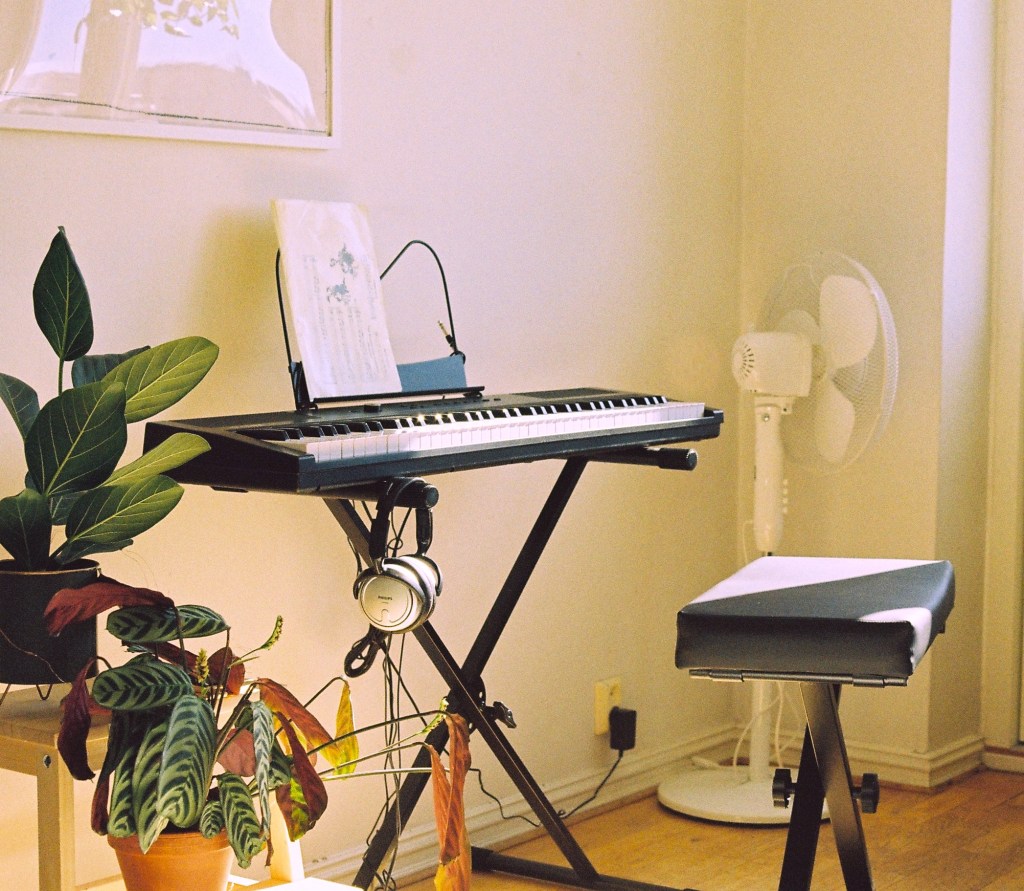
Through a series of happy accidents, my 2026 so far has been defined by learning completely new skills. Since January, I’ve started piano lessons (my first ever engagement with a musical instrument), learned riso printing, and started shooting film photos. Having started from no prior knowledge in each case, I have felt more like a child in the last few months than any time since I actually was one.
As children, we’re encouraged to learn new things almost every day. Not just the things that are considered foundational to human life (walking, reading, brushing our teeth) but countless other activities that some adults give up as soon as they are free of school and/or their parents. I’m thinking: volleyball, building gingerbread houses, painting, giving speeches, writing poetry, mummifying eggplants, guitar.
Becoming an adult, in many cases, is gaining the right to stop learning new skills (if one so chooses). As an adult, I can choose to reduce the means through which I express myself to only those with which I am most comfortable. I can settle into what is known to them, where my competencies lie. I only deepen those tracts every time choose them.
Multimodal projects try to coax participants out of the most familiar tracts. By forcing ourselves, as researchers, to answer questions through media other than written/spoken word (ie. collage, performance, poetry, drawing, audio-visual pieces), we purposefully make everyone involved less comfortable. We challenge ourselves to think more like children, when the world was less familiar and answers weren’t always so ready-made.
Throughout my fieldwork, when I’ve described the array of Rhythms of Love’s methods to new participants, many have shied away from the less recognizable ones (collage, audio-emotion diaries, photography), and have politely focused on the traditional interview. Of course, having a conversation about one’s relationship is less intimidating than making pseudo-private audio diaries about it, or cutting and pasting together magazine scraps that evoke it.
By making myself personally uncomfortable in my slew of new hobbies, I am sensitizing myself to the challenge I am posing for my participants. As an adult, I’ve forgotten how frustrating it is to be publicly incompetent! I am now reminded every week when I play the wrong note in front of my piano teacher, or need my partner to explain to me (yet again) how to change the film in my camera. Each time I take a fieldwork photo with my analog camera, I am afraid I’ve set something wrong and the result will be irreparably light, dark or blurry. The lack of control in how I move from intention to action to result feels unsettling, embarrassing. It’s a feeling I’ve not had to reckon with in years.
Familiar adult life can also make you forget how vivid the world appears to you when you’re confronted with genuine novelty. So far, the non-traditional methods of Rhythms of Love have resulted in insights neither I, nor my participants expected.
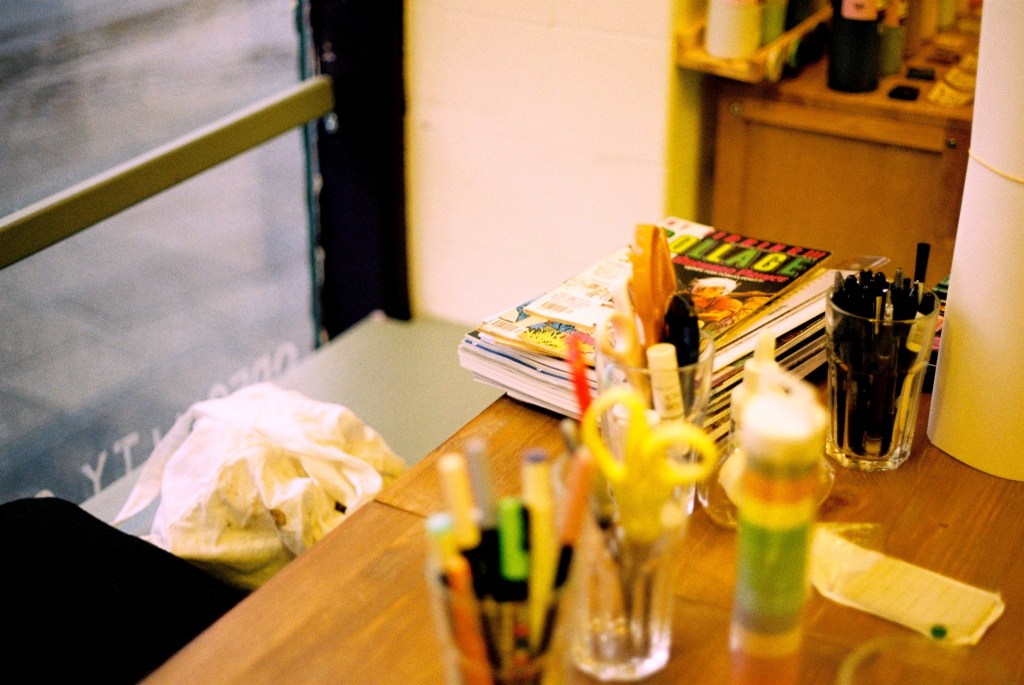
For one person, making audio diaries was at first awkward, but quickly revealed to him just how often he thinks about his partner. It enabled him to meet himself in a new way, and brought thoughts that usually come and go without a trace to the light in the form of a material recording. In my relationship-collaging workshops, participants usually start out bewildered by the task before them, the stacks of magazines, the scissors and glue. By the end, they almost always end up with a coherent collage before them, and a unique explanation of what it represents about their relationship, the stories it tells and the justification for each piece. To reach that unique articulation of their relationship, they have to go through the chaos of searching images, cutting and gluing, making mistakes and finding solutions, all the while thinking through the framework of their relationship.
When it comes to the subject of romantic love and our romantic relationships, it is difficult not to slip into cliché. It takes the uncomfortable vulnerability of not knowing the end point, or even the in-between point, of an exercise to break free from the well-trodden paths of our descriptions, and create something fresh and alive — a present-moment perspective that does justice to the complexity of our connections.
 Rhythms of Love