I’m sat in a cafe on a particularly chilly morning, surrounded by people on their laptops, reading books, or engrossed in conversation. The man across from me is wearing a thick woollen jumper, and as he tugs on the cuffs to cover his wrists, I find myself admiring the stitchwork. It’s a fisherman’s rib, which is known for its warmth and thick squishy texture thanks to the open space in the structure of the stitches; perfect against the wind on days like today.
I take my current knitting project out of my bag, an oversized coffee brown jumper with a lighter brown design on the hem. Many people learn how to knit using memorable depictions of the movement to create a stitch; what is, at its most basic, an in-over-through-off motion, I learnt using a particularly violent set of instructions, instead repeating stab it, strangle it, throw it off a cliff as I found my way through tangled yarn to wearable items. Whilst I’ve left the murderous script behind, the sensation of yarn pulled taut and needles dragging against my fingers is one that persists, and as I settle into the rhythm of knitting this morning in the cafe, the repetitive movements become second nature, and the shape of each stitch melts into the construction of the jumper itself.

Since I moved to Berlin, and especially since engaging more with participants’ relationships and lives, I have found increased value in my knitting practice. What used to be a pleasant mindless activity to busy my hands whilst watching films or TV shows is now a sacred time for reflection. I enjoy sitting in silence, watching as loose yarn becomes fabric, and letting my mind roam over the many conversations and interactions I’ve had. Time leaps from the clock-face onto my needles; I am finished not when a particular amount of time has passed, but when my hands begin to ache and my mind is restless again.
Today, I am looking at the man wearing a deep-blue fisherman’s jumper and thinking about the shopkeeper I met yesterday who was wearing a brightly coloured scarf knit by her sister. Our brief conversation about knitting for others reminded me of Susan Jones’ article, Knitting as Temporal-Material Entanglement (2024), where she explores how time is an affective resource for knitters. Spending time making something for someone enfolds a sentimentality in the piece, where the recipient is thought of frequently as the fabric comes together, for both logistical reasons (what size the item should be, what yarn the receiver might prefer to wear as fabric) and in relation to an emotional connection, as the knitter creates the piece with loving attention.
Having knit several winter pieces for close friends and family recently, I recognise the affective strands of making for others, and I have begun to think about my reflection knits as similar worlds. In addition to knitting for, I knit from – from the field, from my memories, from a relationship to time that foregrounds embodied experience. The remnant feelings, moods, and emotions from the day emerge in this time, showing up in the yarn tension and my capacity to spend less/more time in reflection that day.
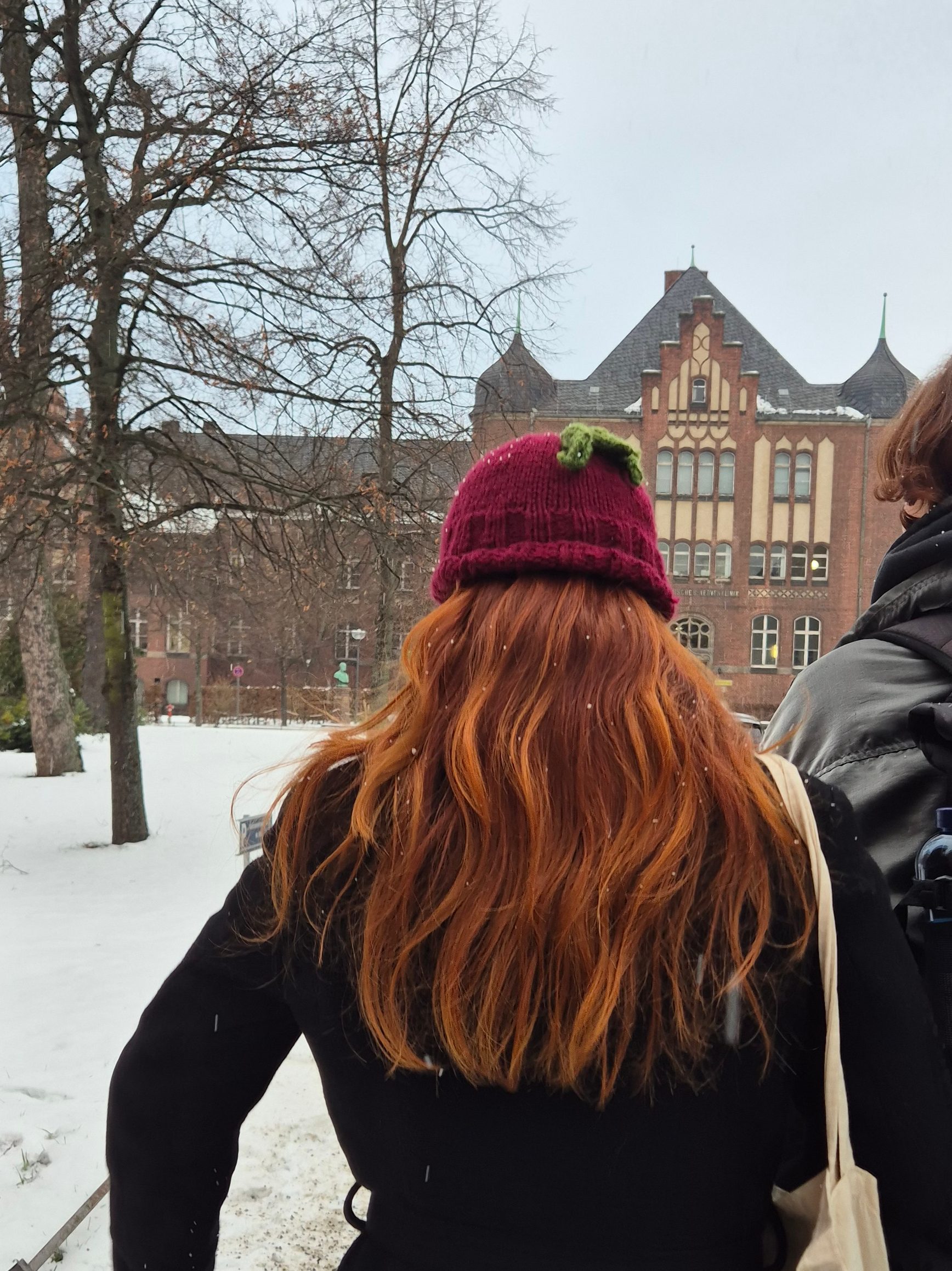
If you know where to look in the finished pieces, stories of sentimentality are hiding in plain view: a pair of mittens with one thumb ever so slightly longer than the other; felted slippers with uneven stripe length at the toe; a hat with wonky ribbing at the hem. These mistakes recall moments of (distr)action, my mind wandering to relationships around me, both those I’m learning about from participants, and my own.
When I’m knitting mittens for my partner, I’m drawing strands from interviews, reflecting on how long-term relationships endure through difficulties, how love is a commitment to working and re-working, a continuous movement together to build something over time. The stories of those I’ve engaged with throughout the day become part of the mittens, just as images of the grateful warm hands wearing the mittens are enfolded into the stitches.
With this insight into my own knitting, I see other knitted pieces with a new light, and I think back to the shopkeeper’s colourful scarf. What stories were knit into the stitches? What worlds was her sister dipping into, drawing strands from, being distracted by? Did the yarn choice, the bright colour and patterned texture, represent a sisterly sentimentality?
As the days get blustery and cold, I knit more frequently, creating a textured space where (reflections on) relationships are woven together. As the yarn is pulled through my fingers and around the needles, fleeting moments return to my attention, and affective threads are teased out as fabric comes together.
 Rhythms of Love